Japanese Fuse Bead Patterns: Choju-giga, Lucky Charms, Folk Tales (30 Free)
・ mamepix editors

Japanese masterpieces such as the Choju-giga scrolls, lucky charms and folk toys, the year's customs from New Year to Setsubun, Hinamatsuri and Children's Day, and folk tales and yokai, as 30 free fuse bead patterns. 29 of them need only the 24 colors of the Starter Set. Each has color codes, bead counts per color and a printable PDF.
30 free Japanese patterns
mamepix has free patterns of Japanese masterpieces such as the Choju-giga scrolls and works by Sotatsu, Korin and Jakuchu (11), lucky charms such as the akabeko, kokeshi and beckoning cat (6), seasonal customs such as the treasure ship, the Setsubun ogre, Hina dolls and the samurai helmet (7), and folk tales and yokai such as Momotaro, Princess Kaguya and the kappa (6). The one with the fewest colors is the Origami crane (3).
cm = beads × 0.26. See them all in Lucky Charms & Folk Toys, Folk Tales & Yokai and Famous Paintings.
The Choju-giga and Japanese masterpieces
The rabbit, frog and monkey of the Choju-jinbutsu-giga, the picture scrolls kept at Kozan-ji in Kyoto, take only black, white and grey. Sotatsu's Wind God and Thunder God and Korin's Irises come with their gold-leaf ground, along with Jakuchu's rooster, Moronobu's Beauty Looking Back, a Sharaku-style actor print and an ukiyo-e cat inspired by Kuniyoshi. The originals are centuries-old public-domain works; the patterns are mamepix's own pixel versions.
| Pattern | Beads | Size (2.6 mm) | Colors |
|---|---|---|---|
| Rabbit and frog sumo (Choju-giga) | 26×20 | about 6.8×5.2 cm | 3 |
| Rabbit from the Choju-giga scrolls | 18×22 | about 4.7×5.7 cm | 3 |
| Frog from the Choju-giga scrolls | 20×19 | about 5.2×4.9 cm | 3 |
| Monkey from the Choju-giga scrolls | 18×18 | about 4.7×4.7 cm | 4 |
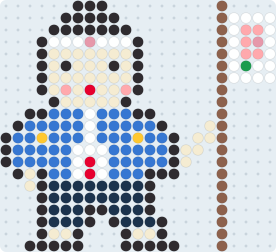
| Wind God (Tawaraya Sotatsu) | 24×22 | about 6.2×5.7 cm | 8 |
| Thunder God (Tawaraya Sotatsu) | 24×22 | about 6.2×5.7 cm | 8 |
| Irises (Ogata Korin) | 29×18 | about 7.5×4.7 cm | 6 |
| Jakuchu's rooster (Ito Jakuchu) | 22×21 | about 5.7×5.5 cm | 9 |
| Beauty Looking Back (Moronobu) | 15×29 | about 3.9×7.5 cm | 8 |
| Sharaku-style actor print | 21×27 | about 5.5×7 cm | 6 |
| Ukiyo-e style cat | 20×18 | about 5.2×4.7 cm | 6 |
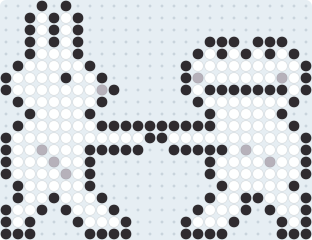 Rabbit and frog sumo (Choju-giga)
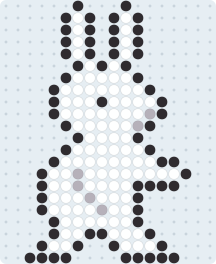 Rabbit from the Choju-giga scrolls
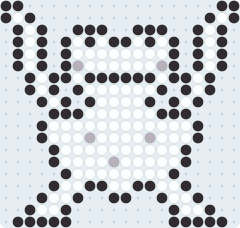 Frog from the Choju-giga scrolls
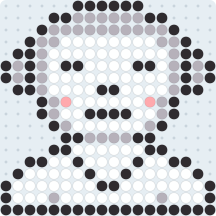 Monkey from the Choju-giga scrolls
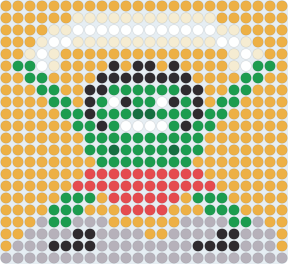 Wind God (Tawaraya Sotatsu)
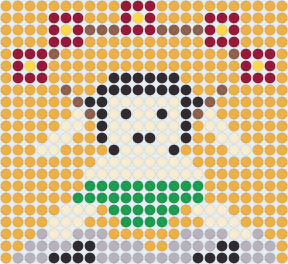 Thunder God (Tawaraya Sotatsu)
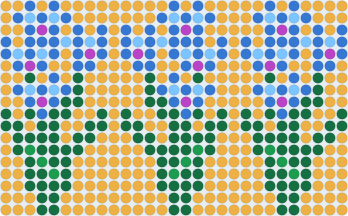 Irises (Ogata Korin)
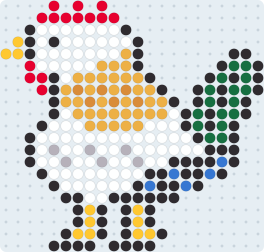 Jakuchu's rooster (Ito Jakuchu)
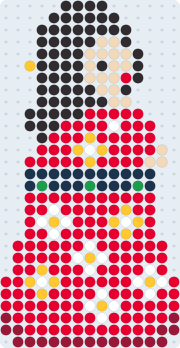 Beauty Looking Back (Moronobu)
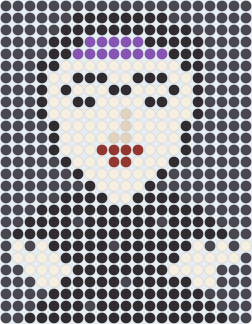 Sharaku-style actor print
 Ukiyo-e style cat
Lucky charms and folk toys: akabeko, kokeshi, tanuki

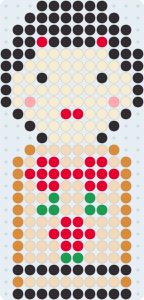
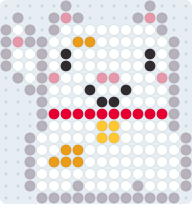
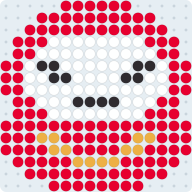
The akabeko red cow of Aizu, given for children's health; kokeshi dolls from northern Japan; the Shigaraki tanuki, a charm for business; the origami crane for long life; and the beckoning cat and daruma. Lovely souvenirs of Japan or decorations for a new home.
| Pattern | Beads | Size (2.6 mm) | Colors |
|---|---|---|---|
| Akabeko (red cow) | 22×15 | about 5.7×3.9 cm | 4 |
| Kokeshi doll | 12×25 | about 3.1×6.5 cm | 7 |
| Shigaraki tanuki | 18×23 | about 4.7×6 cm | 4 |
| Origami crane | 24×14 | about 6.2×3.6 cm | 3 |
| Maneki-neko (Lucky Cat) | 16×17 | about 4.2×4.4 cm | 7 |
| Daruma | 16×16 | about 4.2×4.2 cm | 4 |


New Year, Setsubun, Hinamatsuri and Children's Day
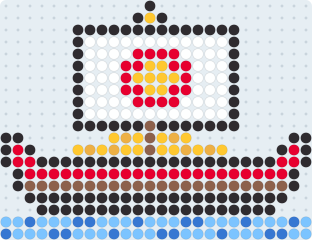
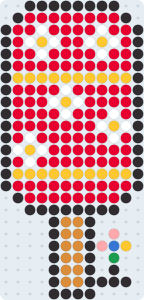
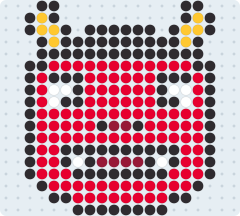
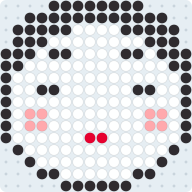
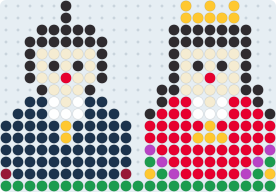
The treasure ship, lion dance and hagoita paddle for New Year, the ogre and Okame for Setsubun in February, the emperor and empress dolls for Hinamatsuri in March, and the samurai helmet for Children's Day in May. Change them with the seasons and enjoy them all year.
| Pattern | Beads | Size (2.6 mm) | Colors |
|---|---|---|---|
| Treasure ship (takarabune) | 26×20 | about 6.8×5.2 cm | 8 |
| Lion dance (shishimai) | 20×18 | about 5.2×4.7 cm | 6 |
| Hagoita paddle | 12×25 | about 3.1×6.5 cm | 8 |
| Setsubun ogre (oni) | 20×18 | about 5.2×4.7 cm | 5 |
| Okame (Otafuku) mask | 16×16 | about 4.2×4.2 cm | 4 |
| Hina dolls (emperor and empress) | 23×16 | about 6×4.2 cm | 9 |
| Samurai helmet for Children's Day | 22×16 | about 5.7×4.2 cm | 6 |

Folk tales and yokai: Momotaro, Kintaro, Kaguya-hime, kappa

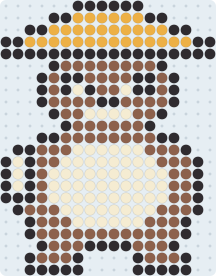
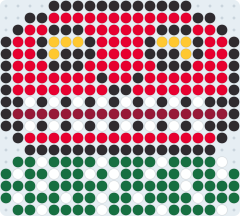
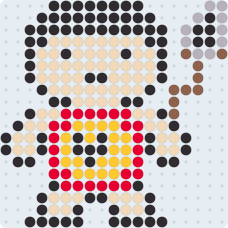
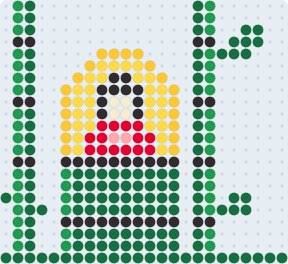
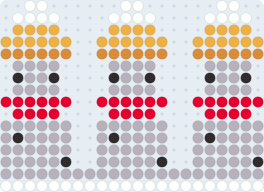
Momotaro, Kintaro, Princess Kaguya and Kasa Jizo from Japanese folk tales, plus the kappa and the tengu. Make them together after story time while you retell the tale. Kintaro suits Children's Day, Kaguya-hime moon-viewing and Kasa Jizo winter.
| Pattern | Beads | Size (2.6 mm) | Colors |
|---|---|---|---|
| Momotaro (Peach Boy) | 23×21 | about 6×5.5 cm | 11 |
| Kintaro (Golden Boy) | 19×19 | about 4.9×4.9 cm | 6 |
| Kaguya-hime (the bamboo princess) | 24×22 | about 6.2×5.7 cm | 8 |
| Kasa Jizo (the hat-wearing Jizo) | 22×16 | about 5.7×4.2 cm | 6 |
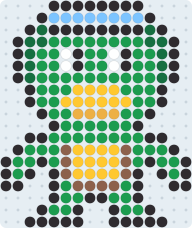
| Kappa (river imp) | 16×19 | about 4.2×4.9 cm | 8 |
| Tengu mask | 22×17 | about 5.7×4.4 cm | 5 |

Display and gift ideas
- A mini folding screen: frame the Wind and Thunder Gods, or the irises, side by side
- Fridge magnets: put a magnet on the back of the akabeko, kokeshi or beckoning cat
- Seasonal swaps: treasure ship → Setsubun ogre → Hina dolls → Children's Day helmet
- Souvenirs: stick a daruma or origami crane on a card for a friend
- After story time: make Momotaro or Princess Kaguya as a bookmark or ornament
FAQ
May I make and display the Choju-giga or Wind and Thunder God patterns?
The originals are public-domain works by artists who died centuries ago, and the patterns are mamepix's own pixel versions. You are free to make them for yourself or as gifts; please don't redistribute or sell the patterns themselves.
Which is the easiest?
The Origami crane, with only 3 colors (106 beads). The Choju-giga patterns also use just black, white and grey.
Can I make them with no beads at home?
29 of them can be made with the Starter Set alone (24 bead colors and all the tools). Each pattern page also offers a kit for that pattern only.
Get new free patterns by email
New free patterns are added every week; we email you at most once a week. Unsubscribe any time with one click.
We use your address only to send these emails. Privacy policy